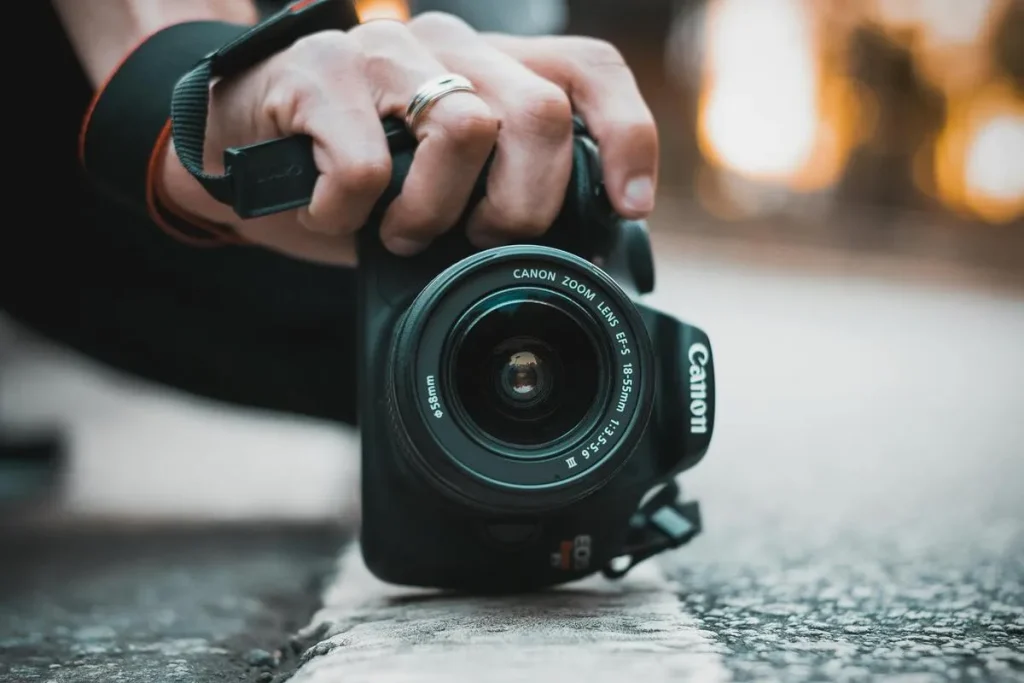
Finding the best camera for beginners doesn’t have to be a daunting task; it’s about striking that perfect balance between user-friendly features, a kit lens, 4k video quality, and a system that grows with you as you review your progress. Whether it’s capturing those fleeting moments in crisp detail, experimenting with creative shots, or shooting 4k video, the right starter camera, often reviewed as beginner cameras, sets the stage for your photographic journey without overwhelming you. Our roundup cuts through the tech jargon, focusing on cameras and APS video that combine ease of use, reliability, and value—ideal for budding photographers ready to explore their potential. So if you’re eager to start snapping stunning photos with minimal fuss, scroll down as we unveil our top picks tailored just for beginners, including instant camera, stills camera, mirrorless camera, and frame camera options.
Image | Product & Details | View |
|---|---|---|
Best Overall  | Canon EOS Rebel T7 DSLR Camera | |
Best Budget  | Nikon D3500 | |
Best DSLR Camera  | Canon EOS Rebel SL3 Camera | |
Best Bridge Camera  | Panasonic LUMIX FZ300 Long Zoom Digital Camera | |
Best Mirrorless Camera  | Sony ILCE-7M3K/B a7 III Full Frame Mirrorless Camera | |
Best Instant Camera  | Fujifilm Instax Mini EVO Instant Camera | |
Best Point & Shoot Camera  | Sony RX100 VII Premium Compact Camera |
Best Camera For Beginners Overall
Canon EOS Rebel T7 DSLR Camera
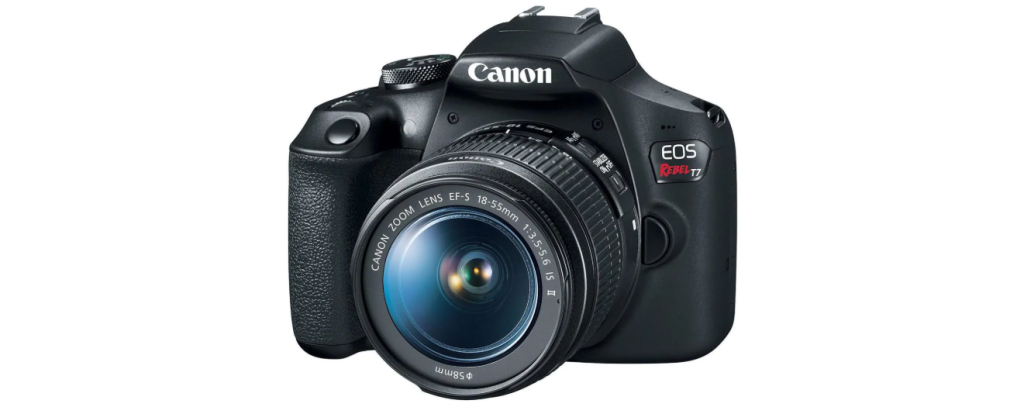
The Canon EOS Rebel T7 DSLR Camera, bundled with an 18-55mm lens, stands out for its remarkable ability to capture high-quality images and video effortlessly. This camera is a gateway into the world of professional photography and video for beginners, offering a blend of simplicity and advanced features that encourage learning, reading, and experimentation.
One of the most special aspects of this camera is its 24.1 Megapixel CMOS sensor which ensures every shot and video you take is detailed and vibrant, ready to read. Whether you’re capturing landscapes or portraits, the clarity and color reproduction are impressive. The optical viewfinder gives you a clear view of your subject in real-time without delay, adding to the authenticity of shooting with a DSLR.
For those who love sharing their captures instantly or enjoy remote shooting capabilities, the built-in Wi-Fi and NFC technology in the mirrorless beginner camera make it incredibly easy to read and share photos and video. You can connect your camera to a compatible smart device and use it as a remote control – perfect for group shots where you want to be in the picture too! Plus, sharing your photos on social media or sending them directly to friends becomes seamless.
Compatibility with Canon’s wide range of EF lenses further extends this camera’s versatility for video. Whether it’s macro lenses for close-up shots or telephoto lenses for distant subjects, there’s always an option available within Canon’s extensive lens lineup. Using kit lenses like the included 18-55mm allows new photographers to learn different photography styles without having to invest immediately in more expensive mount lenses for their beginner camera.
The technical specs of this beginner camera include a reliable 9-Point AF system paired with AI Servo AF that ensures your subjects are always sharp regardless of how fast they move. This feature is ideal for sports photography or capturing any fast-moving action scenes accurately.
Best Budget Camera For Beginners
Nikon D3500
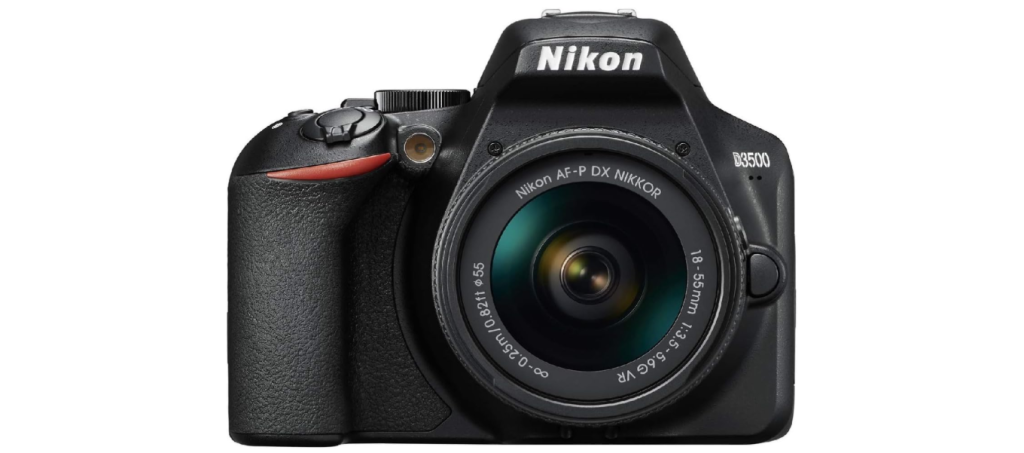
The Nikon D3500 stands out as the perfect entry point for beginners into the world of DSLR photography, thanks to its intuitive design and user-friendly features. With a compact and durable build, this digital camera is tailor-made for those who are transitioning from smartphone photography but want to delve deeper into the art without feeling overwhelmed.
One of the most appealing aspects of the Nikon D3500 is its simplicity. The camera comes equipped with an easy Auto Mode that takes care of all the technical settings for you, allowing you to focus on framing your shots. For those eager to learn more about photography techniques, the Guide Mode acts as a personal tutor right in your camera menu, explaining various shooting modes and settings in an easy-to-understand language.
Photography enthusiasts will appreciate how this beginner camera makes sharing photos effortless through its compatibility with the SnapBridge app. This feature allows you to instantly transfer images from your camera body directly to your smartphone or tablet via Bluetooth, making it easier than ever to share high-quality images on social media or with friends and family.
Despite being designed for beginners, the Nikon D3500 does not compromise on image quality. Its powerful image sensor significantly surpasses typical smartphone cameras by capturing sharper details and richer colors. This cropped sensor DSLR also boasts an impressive autofocus system that ensures your subjects are always crisp and clear, regardless of whether they’re perfectly still or in fast motion.
For those concerned about shaky hands affecting their photo quality – worry no more! While traditional DSLRs might require additional accessories like tripods or external stabilizers to combat camera shake, this digital camera’s ergonomic design offers a comfortable grip that aids in steadying shots even at slow shutter speeds.
Moreover, aspiring photographers will be thrilled with the array of creative possibilities unlocked by exploring different lenses compatible with this DX-format DSLR. Whether it’s capturing wide landscapes or zooming in on distant subjects without losing clarity – there’s a lens option available for every interest area within photography.
Best DSLR Camera For Beginners
Canon EOS Rebel SL3 Camera
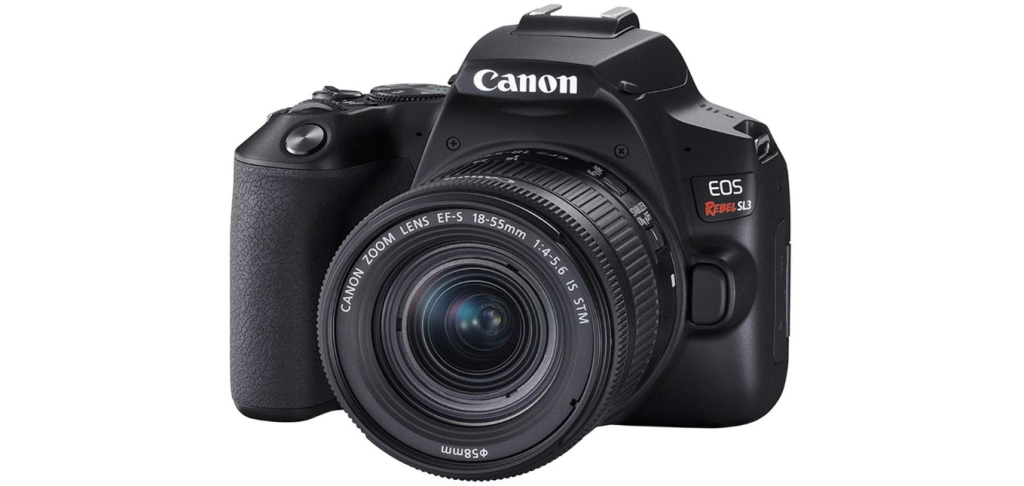
One of the most special things about the Canon EOS Rebel SL3 is its ability to transform into a high-quality webcam. This feature alone makes it an incredibly versatile tool, not just for photography enthusiasts but also for those who have adapted to remote work or learning environments. Imagine having a camera that captures stunning photos and then, with minimal effort, becomes an integral part of your video conferencing setup.
The Dual Pixel CMOS AF (Auto Focus) system is another standout feature. It ensures your subjects are always in sharp focus, whether you’re capturing a fleeting moment or filming a scene in motion. This technology is particularly beneficial for beginners who might struggle with manual focusing, allowing them to produce professional-looking results right from the start.
Flexibility in shooting angles can often be the difference between a good photo and a great one. The Canon EOS Rebel SL3 addresses this by including a vari-angle touch screen. This isn’t just about convenience; it’s about creativity. Whether you’re taking selfies, vlogging, or trying to capture shots from challenging angles, this screen allows you to see what you’re shooting without compromising your position.
Connectivity has become increasingly important in our digital world, and the built-in Wi-Fi feature of this camera doesn’t disappoint. It facilitates easy sharing of images and videos across devices and on social media platforms. For beginners eager to showcase their work or simply share moments with friends and family instantly, this connectivity feature proves invaluable.
When considering where to purchase the Canon EOS Rebel SL3 Camera, Amazon emerges as an excellent option due to its vast range of products spanning electronics like DSLR cameras as well as mirrorless cameras and sports & action cameras among others. Amazon’s array of services enhances the buying experience significantly – from Amazon Prime ensuring faster delivery times to various payment options like Amazon Visa making purchases more accessible.
Best Bridge Camera For Beginners
Panasonic LUMIX FZ300 Long Zoom Digital Camera
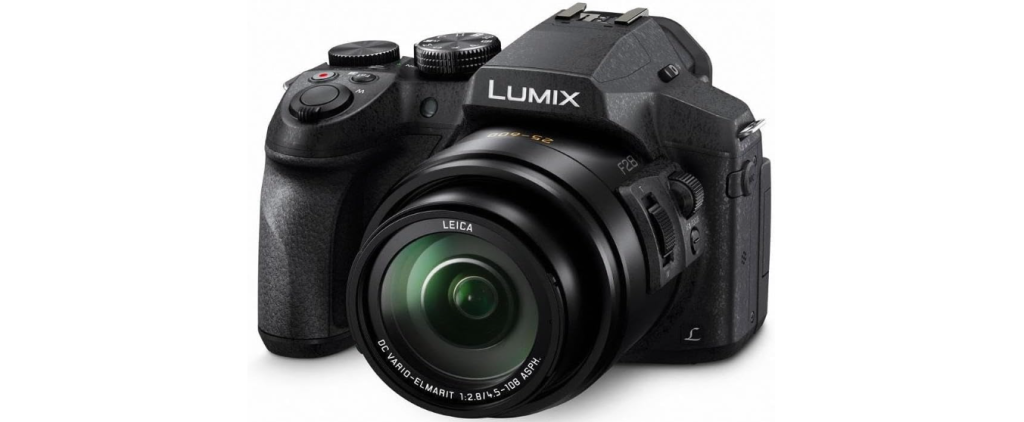
The Panasonic LUMIX FZ300 stands out in the crowded market of beginner cameras, primarily due to its 4K video capability and robust design. This camera is a game-changer for those stepping into the world of photography or videography with aspirations beyond just capturing moments. Its 4K photo technology ensures that you never miss a moment, allowing users to extract high-resolution photos from their videos.
One of the most appealing features of this camera is its durability. Designed to withstand harsh environments, it’s both splashproof and dustproof. Whether you’re caught in a sudden rainstorm or trekking through dusty trails, the LUMIX FZ300 has got your back. This ruggedness makes it an ideal companion for adventurers who love capturing their experiences without worrying about damaging their gear.
At the heart of this camera lies a Leica lens with an impressive 24x zoom and constant F2.8 aperture across the entire zoom range. For beginners, this means being able to capture sharp images even from afar and enjoying beautiful blurry backgrounds that make your subject stand out—a feature often desired by portrait photographers and vloggers alike.
Moreover, shaky hands won’t be much of an issue thanks to its 5 Axis Hybrid Optical Image Stabilizer Plus. This technology significantly reduces blurriness in photos taken at long focal lengths or low light conditions—common challenges for many entry-level photographers.
The inclusion of a 12.1 Megapixel High Sensitivity MOS Sensor paired with Venus Engine further enhances image quality by providing diffraction compensation. What does this mean for users? Even when shooting at smaller apertures where diffraction typically occurs (leading to less sharp images), this camera manages to maintain great image quality.
For those interested in more than just photography, vlogging capabilities are top-notch with stabilized video shooting made possible through both optical stabilization and level shot function—an essential tool for content creators looking forward to producing professional-looking footage over time without investing in additional stabilizing equipment immediately.
Its fixed lens system might seem like a limitation compared to interchangeable lens cameras; however, it offers simplicity without sacrificing versatility—a perfect blend for beginners not yet ready or willing to dive into complex lens options but still wanting great autofocus performance across various situations.
Best Mirrorless Camera For Beginners
Sony ILCE-7M3K/B a7 III Full Frame Mirrorless Camera
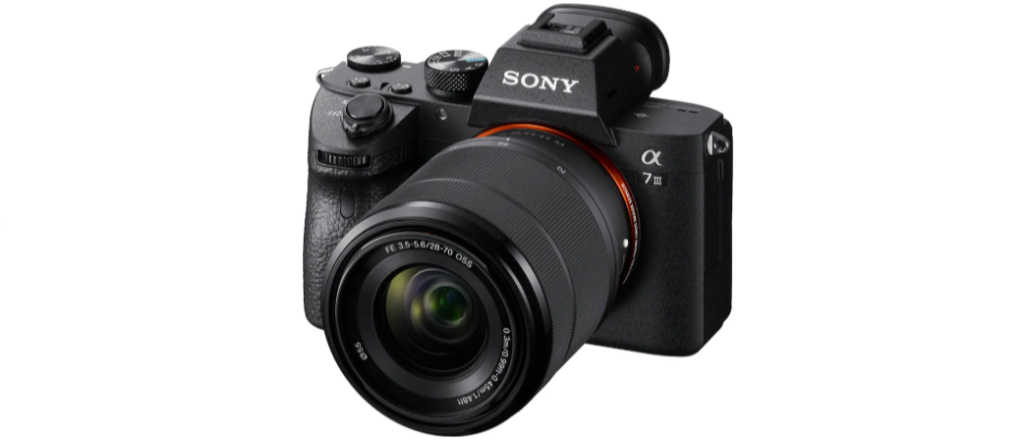
The Sony a7 III stands out in the realm of mirrorless cameras, not just for its sleek design but for its powerhouse performance that caters to both beginners and seasoned photographers. This camera redefines what we expect from entry-level gear by offering features typically reserved for professional-grade models.
At the heart of this device is a high-resolution sensor known for its fast readout speed, which significantly boosts image quality. Whether you’re capturing the vibrant hues of a sunset or the subtle tones of an overcast day, the images produced are nothing short of breathtaking. The wide dynamic range ensures your photos look as close to real life as possible under various lighting conditions.
One cannot discuss the Sony a7 III without mentioning its autofocus system. Covering 93% of the image area, it’s incredibly fast and accurate, making missed opportunities a thing of the past. Whether you’re photographing fleeting moments or dynamic scenes, this camera keeps up with ease.
For those who value discretion in their photography endeavors, having silent shutter options is invaluable. It allows you to capture moments without drawing attention to yourself – perfect for wildlife or candid street photography. Conversely, when needed, switching back to mechanical shutter offers versatility depending on your shooting environment and needs.
This model comes equipped with a SEL2870 lens right out of the box—often referred to as ‘kit lens.’ While some might overlook kit lenses in favor of more expensive options thinking they offer superior quality; this particular lens proves that notion wrong by delivering sharp images across various focal lengths.
Best Instant Camera For Beginners
Fujifilm Instax Mini EVO Instant Camera
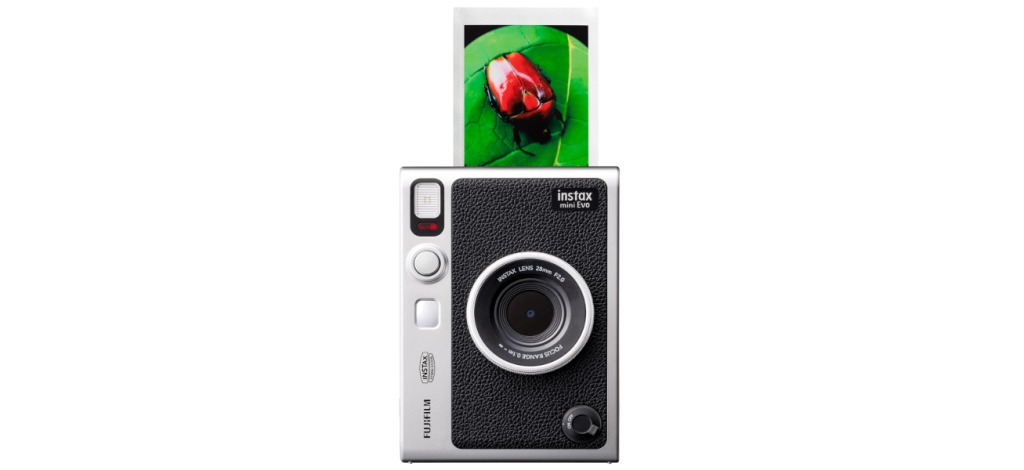
Blending the nostalgia of retro photography with modern digital technology, the Fujifilm Instax Mini EVO Instant Camera stands out as a remarkable option for beginners and enthusiasts alike. This hybrid camera captures the essence of instant photography while providing users with an array of creative controls unseen in traditional instant cameras.
At its core, the Instax Mini EVO thrives on versatility. Offering 100 different combinations through ten lens effects and ten film effects, it allows photographers to experiment with their images like never before. Whether you’re aiming for a soft focus for dreamy portraits or a vivid contrast for striking landscapes, this camera puts creative power directly into your hands.
One of the most appealing features is its ability to connect to smartphones via Bluetooth. This not only enables easy printing from your phone but also transforms your smartphone into a remote control for the camera. With this feature, taking group shots or selfies becomes hassle-free, ensuring no one is left out of memorable moments.
The high-resolution prints at 600DPI are nothing short of impressive. Unlike many other instant cameras that may produce grainy images, photos from the Instax Mini EVO are sharp and vibrant—perfectly capturing memories in stunning detail. The 2” x 3” INSTAX MINI prints are ideal keepsakes and can be shared instantly with friends and family.
Moreover, using the free INSTAX MINI EVO App enhances this experience further by offering photo editing capabilities right at your fingertips. From adjusting brightness levels to adding quirky frames or stickers before printing, this app ensures each print reflects your unique style.
Despite being packed with advanced features such as electronic viewfinder (EVF), fixed screen display for framing shots accurately without guesswork; some might find its reliance on digital settings rather than manual dials as less engaging physically compared to purely analog counterparts—though it’s hardly a deal-breaker given its target audience who appreciate convenience alongside quality.
For those who cherish physical prints yet live in an increasingly digital world—the Fujifilm Instax Mini EVO strikes an excellent balance between both realms. It encourages not just taking pictures but making them—with intentionality behind every shot encouraged by its diverse range of artistic options available before even hitting print.
Best Point & Shoot Compact Camera For Beginners
Sony RX100 VII Premium Compact Camera
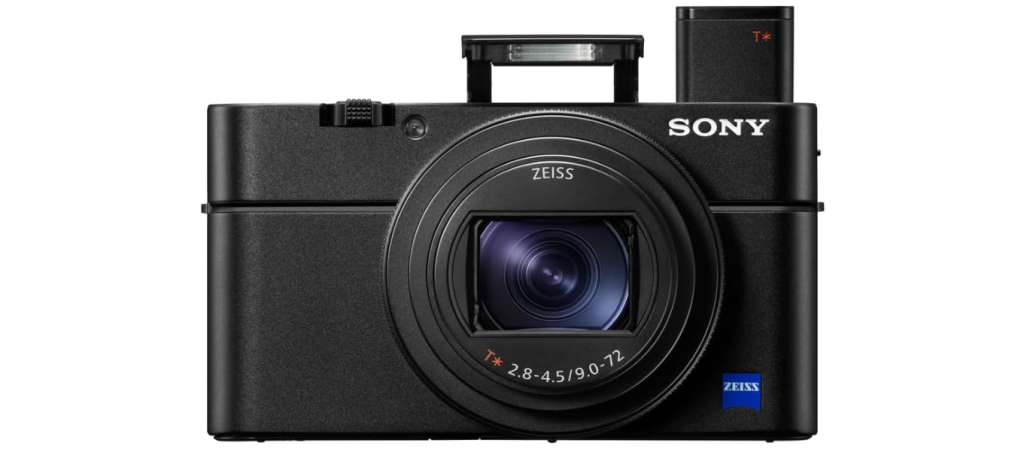
The Sony RX100 VII stands out in the compact camera world for packing pro-level features into a body that fits in your pocket, making it an ideal choice for beginners eager to explore photography and video production without being overwhelmed. This camera is a powerhouse of technology, combining ease of use with advanced capabilities that are rare in compact cameras.
At its core, the Sony RX100 VII boasts a 1.0-type stacked CMOS sensor with 20.1 MP photo sensor size, ensuring high-quality images even in challenging lighting conditions. Its ability to shoot at 20 fps continuous shooting allows you to capture every moment with precision and clarity, from fast-moving sports action to fleeting wildlife scenes.
One of the most impressive aspects of this camera is its broad zoom capability. The 24–200 mm zoom lens offers high-magnification capability without sacrificing image quality. Whether you’re capturing landscapes or zooming in on distant subjects, the images produced are sharp and clear.
For those interested in both stills and movies, this camera’s video specs do not disappoint. It supports advanced video production features such as a microphone jack for better audio recording and vertical position data recording which enhances post-production workflow by simplifying orientation adjustments.
Real-time Eye AF is another standout feature, tracking human and animal subjects accurately to ensure perfect focus on the eyes – crucial for portrait photography where eye detail can make or break a shot. Coupled with its impressive autofocus system – boasting 357 point focal-plane phase detection AF and 425 contrast-detection AF points – it ensures your subject stays sharp regardless of movement.
Despite its compact size, the RX100 VII does not compromise on performance or versatility – embodying what many beginner cameras aspire to be but often fall short of achieving.
Overview of camera types and key features for beginners
Choosing the right camera as a beginner can be overwhelming with the myriad of options available in the market. To simplify the process and ensure you make an informed decision, let’s delve into the various types of cameras, important features and specifications, budget considerations, top brands, and address some frequently asked questions (FAQs).
Types of Cameras
DSLR (Digital Single-Lens Reflex):
- Definition: DSLRs utilize a mirror mechanism to reflect light from the lens to an optical viewfinder, allowing photographers to view the scene directly through the lens.
- Main Benefits/Advantages:
- Versatility, excellent image quality, and interchangeable lenses.
- Ideal for capturing high-quality photos and videos in various situations.
- Ideal for: Enthusiasts and professionals seeking maximum control over their photography.
- Best Brands: Canon, Nikon
Mirrorless Cameras:
- Definition: Mirrorless cameras lack the mirror mechanism found in DSLRs, resulting in a more compact and lightweight design.
- Main Benefits/Advantages:
- Compact size, advanced features like electronic viewfinders, and in-body image stabilization.
- Perfect for beginners and travelers seeking high performance in a smaller form factor.
- Ideal for: Beginners and enthusiasts prioritizing portability without compromising on image quality.
- Best Brands: Sony, Fujifilm, Panasonic
Point & Shoot Cameras:
- Definition: Point & Shoot cameras are compact, lightweight, and designed for easy operation, making them suitable for casual photography.
- Main Benefits/Advantages:
- Easy to use with limited manual controls, perfect for beginners prioritizing convenience.
- Ideal for capturing everyday moments and spontaneous shots.
- Ideal for: Beginners and casual photographers seeking simplicity and portability.
- Best Brands: Canon, Sony
Bridge Cameras:
- Definition: Bridge cameras bridge the gap between compact point & shoot cameras and DSLRs, offering advanced features in a fixed-lens design.
- Main Benefits/Advantages:
- Versatile zoom lenses with long reach.
- Intermediate photographers seeking a balance between convenience and performance.
- Ideal for: Enthusiasts looking for a versatile all-in-one solution without the hassle of interchangeable lenses.
- Best Brand: Panasonic
Instant Cameras:
- Definition: Instant cameras produce physical prints immediately after capturing a photo, offering a nostalgic and tactile experience.
- Main Benefits/Advantages:
- Instant gratification with tangible prints.
- Perfect for creative experimentation and capturing memories on the go.
- Ideal for: Anyone seeking a fun and unique way to document moments and share memories.
- Best Brand: Fujifilm
Important Features and Specifications
1. Sensor Size:
- Larger sensors generally offer better image quality by capturing more light and producing less noise.
- Full-frame sensors are ideal for professional photographers seeking superior image quality and dynamic range, while APS-C sensors provide a good balance between performance and affordability.
- Micro Four Thirds sensors offer a compact form factor without sacrificing image quality.
2. Megapixels:
- Megapixels determine the resolution of your images, but a higher megapixel count doesn’t always guarantee better quality.
- Higher megapixels are beneficial for cropping and printing large images without losing detail.
- For most users, a camera with around 16-24 megapixels provides ample resolution for everyday photography needs.
3. ISO Range:
- The ISO range determines the camera’s sensitivity to light, crucial for low-light photography and capturing fast-moving subjects.
- A wider ISO range allows for shooting in various lighting conditions without compromising image quality.
- Look for cameras with adjustable ISO settings to control exposure and minimize noise in your photos.
4. Autofocus System:
- A fast and accurate autofocus system is essential for capturing sharp images, especially when photographing moving subjects or in low-light conditions.
- Phase-detection autofocus (PDAF) and contrast-detection autofocus (CDAF) are common autofocus technologies used in cameras.
- Dual-pixel autofocus (DPAF) systems offer superior focusing performance, particularly in live view and video mode.
5. Image Stabilization:
- Image stabilization reduces blur caused by camera shake, ensuring sharp images even in challenging shooting conditions.
- In-body image stabilization (IBIS) moves the camera sensor to compensate for movement, while lens-based stabilization (OIS) adjusts the lens elements.
- Look for cameras with built-in image stabilization for smoother handheld shooting and better low-light performance.
6. Video Recording:
- Consider the camera’s video capabilities if you’re interested in videography.
- Look for features like 4K resolution, frame rate options, and microphone inputs for capturing high-quality videos.
- Cameras with advanced video features like log profiles and manual controls offer greater flexibility in post-production.
7. Lens Compatibility:
- Lens compatibility determines the range of lenses you can use with your camera, offering versatility for different photography styles and subjects.
- Interchangeable lens systems allow you to expand your creative possibilities with a wide selection of lenses, including prime, zoom, and specialty lenses.
- Consider the availability and affordability of lenses compatible with your camera system when making your purchase decision.
8. Burst Shooting Speed:
- Burst shooting speed refers to the number of consecutive shots a camera can capture per second.
- Cameras with fast burst rates are ideal for capturing action-packed scenes, sports events, and wildlife photography.
- Look for cameras with high burst shooting speeds to ensure you don’t miss any decisive moments during fast-paced shooting situations.
9. Connectivity Options:
- Connectivity options allow you to transfer images wirelessly to your computer, smartphone, or other devices for easy sharing and remote control.
- Wi-Fi, Bluetooth, and NFC (Near Field Communication) enable seamless connectivity with compatible devices, making it convenient to share photos on social media or backup files to cloud storage.
- Consider cameras with built-in connectivity features to streamline your workflow and enhance your photography experience.
10. Weather Sealing:
- Weather sealing protects your camera from dust, moisture, and harsh environmental conditions, allowing you to shoot confidently in challenging weather conditions.
- Cameras with weather sealing are suitable for outdoor and adventure photography, ensuring durability and reliability in rugged environments.
- Look for cameras with weather-sealed bodies and lenses to safeguard your equipment against the elements and extend their lifespan.
Photography Tips for Beginners
Photography is an art form that allows us to capture moments, express creativity, and evoke emotions through images. For beginners, mastering the basics is crucial to developing their skills and creating stunning photographs. In this comprehensive guide, we’ll explore essential photography tips covering understanding focal length, aperture, shutter speed, ISO, composition techniques, how to shoot different subjects, and common beginner mistakes to avoid.
Understanding Focal Length, Aperture, Shutter Speed, ISO
- Focal Length: Focal length determines the angle of view and magnification of your lens. A shorter focal length (wide-angle) captures more of the scene, while a longer focal length (telephoto) magnifies distant subjects.
- Aperture: Aperture controls the amount of light entering the camera lens. A wider aperture (lower f-stop number) creates a shallow depth of field, ideal for portraits, while a narrower aperture (higher f-stop number) increases depth of field, suitable for landscapes.
- Shutter Speed: Shutter speed dictates the duration of time the camera’s shutter remains open. A faster shutter speed freezes motion, ideal for capturing fast-moving subjects, while a slower shutter speed creates motion blur, adding a sense of movement to your images.
- ISO: ISO measures the sensitivity of your camera’s sensor to light. A lower ISO produces cleaner images with less noise but requires more light, whereas a higher ISO increases sensitivity but may introduce grain or noise to your photos.
- White Balance: White balance refers to the color temperature of light in your photographs. Adjusting white balance ensures accurate color representation in various lighting conditions. For instance, setting the white balance to ‘Daylight’ for outdoor shots or ‘Tungsten’ for indoor lighting can significantly enhance color accuracy.
Composition Techniques
- Rule of Thirds: Divide your frame into a 3×3 grid and position key elements along the gridlines or their intersections for a balanced composition.
- Leading Lines: Use natural or man-made lines to lead the viewer’s eye through the image and create depth and visual interest.
- Symmetry and Patterns: Look for symmetrical subjects or repeating patterns to add structure and harmony to your compositions.
- Foreground Interest: Incorporate foreground elements to add depth and perspective to your images, drawing the viewer into the scene.
- Negative Space: Embrace empty spaces around your subject to create a minimalist and impactful composition.
How to Shoot Different Subjects
- Portraits: Focus on capturing genuine expressions and emotions. Pay attention to lighting, posing, and composition to flatter your subject.
- Landscapes: Experiment with different perspectives and focal lengths to convey the vastness and beauty of landscapes. Use leading lines and foreground interest to add depth to your images.
- Street Photography: Be observant and capture candid moments that tell a story. Experiment with different angles and compositions to capture the essence of urban life.
- Wildlife: Practice patience and be prepared to capture fleeting moments. Use long lenses to maintain a safe distance while capturing detailed shots of wildlife in their natural habitat.
- Food Photography: Pay attention to lighting and styling to enhance the appearance of food. Experiment with angles and compositions to showcase textures and colors effectively.
Beginner Mistakes to Avoid
- Ignoring the Basics: Take the time to understand the fundamentals of photography, including exposure, composition, and camera settings.
- Overcomplicating Composition: Keep compositions simple and focused to avoid cluttered or distracting images.
- Ignoring Lighting: Pay attention to the quality and direction of light, as it can make or break your photos.
- Not Experimenting: Don’t be afraid to experiment with different techniques, angles, and perspectives to discover your unique style.
- Not Practicing Enough: Photography is a skill that improves with practice. Dedicate time to regularly shoot and refine your craft.
How to Edit Photos
Post-processing plays a vital role in enhancing your images and bringing your creative vision to life. Here’s a brief overview of how to edit photos using Adobe Lightroom:
- Intro to Post-Processing: Post-processing involves adjusting various parameters such as exposure, contrast, color, and sharpness to enhance the visual appeal of your images.
- Using Lightroom: Adobe Lightroom is a powerful editing software widely used by photographers for its intuitive interface and robust editing tools.
- Basic Edits: Start by importing your photos into Lightroom and making basic adjustments like cropping, straightening, exposure correction, and white balance adjustment.
- Color Correction: Fine-tune colors using the HSL (Hue, Saturation, Luminance) panel to achieve the desired color balance and vibrancy.
- Exporting: Once you’re satisfied with your edits, export your photos in the desired format and resolution for sharing or printing.
Accessories for Beginner Photographers
Investing in the right accessories can elevate your photography experience and expand your creative possibilities. Here are essential accessories for beginner photographers:
- Tripod: A sturdy tripod is essential for stable shots, long exposures, and capturing sharp images in low light conditions.
- Lenses: Start with a versatile kit lens and gradually invest in prime or zoom lenses to expand your creative options and improve image quality.
- External Flash: An external flash allows you to control the direction and intensity of light, particularly useful for indoor or low-light photography.
- Camera Bag: Invest in a durable and well-padded camera bag to protect your gear and keep it organized during travel or outdoor shoots.
- Lens Filters: Consider adding polarizing, UV, or neutral density filters to enhance colors, reduce glare, and control exposure in various shooting conditions.
Canon vs Nikon for Beginners
Are you a beginner photographer looking to step up your game with a new camera? The debate between Canon and Nikon is one that has raged on for years, and for good reason. Both brands offer excellent options for photographers of all skill levels, but which one is right for you? In this guide, we’ll explore the key differences between Canon and Nikon cameras to help you make an informed decision.
- Lens Compatibility: One of the most significant factors to consider when choosing between Canon and Nikon is lens compatibility. Canon and Nikon each have their own lens mounts, meaning lenses designed for one brand may not be compatible with the other. Before making a decision, consider the range of lenses available for each brand and how they align with your photography needs.
- User Interface and Ergonomics: The user interface and ergonomics of a camera play a crucial role in how comfortable and intuitive it is to use. Canon cameras are known for their user-friendly interfaces and ergonomic designs, making them a popular choice among beginners. Nikon cameras also offer excellent ergonomics, but some users may find the menu system to be slightly less intuitive compared to Canon.
- Image Quality and Color Science: Both Canon and Nikon cameras are capable of producing stunning images, but they each have their own unique color science. Canon cameras tend to produce warmer tones with vibrant colors, while Nikon cameras lean towards more natural and neutral colors. Ultimately, the best choice comes down to personal preference and the specific look you want to achieve in your images.
- Autofocus Performance: Autofocus performance is essential, especially for beginners who may be shooting fast-moving subjects or in low-light conditions. Canon and Nikon both offer advanced autofocus systems in their cameras, but Canon is often praised for its fast and accurate Dual Pixel autofocus technology. Nikon’s autofocus systems are also highly capable, providing reliable performance in a variety of shooting situations.
- Video Features: If you’re interested in videography, it’s essential to consider the video features offered by Canon and Nikon cameras. Canon cameras are widely regarded as excellent choices for video, thanks to their reliable autofocus and robust video capabilities. Nikon cameras also offer good video performance, but some models may lack features like 4K video or in-body stabilization found in comparable Canon models.
- Price and Value Proposition: Lastly, consider the price and overall value proposition offered by Canon and Nikon cameras. While both brands offer entry-level models at affordable price points, the cost of lenses and accessories may vary. It’s essential to evaluate the long-term investment and potential upgrade paths offered by each brand before making a decision. Additionally, keep in mind that while Nikon cameras may offer better value in terms of features and specifications, Canon’s ecosystem may provide better value in terms of lens selection and availability.
- Customer Support and Service: Canon and Nikon both have extensive customer support networks and provide excellent service for their products. It’s essential to research the warranty coverage and after-sales services offered by each brand to ensure a smooth ownership experience.
In conclusion, both Canon and Nikon are great choices for beginner photographers, each has its own strengths and benefits. When choosing between the two brands, consider factors such as lens compatibility, user interface, image quality, autofocus performance, and video features. Ultimately, the best camera for you is the one that feels most comfortable in your hands and helps you achieve your creative vision.
DSLR vs Mirrorless for Beginners
DSLR cameras, equipped with a mirror optical viewfinder, offer high-quality images with maximum detail and low noise. They provide a wide choice of interchangeable lenses and boast long battery life. However, DSLRs tend to be larger and heavier compared to mirrorless cameras, which can be a drawback for some users.
On the other hand, mirrorless cameras have gained popularity among both professionals and amateurs due to their compact size and modern features. They lack the mirror mechanism found in DSLRs, resulting in a lighter and more portable design. Mirrorless cameras utilize electronic viewfinders and offer interchangeable optics, but they typically have shorter battery life compared to DSLRs.
When considering factors like size, weight, and portability, mirrorless cameras often have the edge over DSLRs, especially in street photography scenarios. However, DSLRs excel in offering a vast selection of interchangeable lenses, allowing photographers to choose specialized lenses for different shooting situations.
In terms of image quality, both DSLRs and mirrorless cameras can produce high-resolution photos, with DSLRs often featuring larger sensors for superior quality. DSLRs also offer full control over depth of field, giving photographers more creative freedom in their shots.
While mirrorless cameras may have advantages in terms of portability and electronic viewfinders, DSLRs maintain their dominance in areas like lens selection and battery life. Ultimately, the choice between DSLR and mirrorless cameras depends on individual preferences and shooting needs.
In conclusion, whether opting for a DSLR or a mirrorless camera, beginners should consider factors such as size, weight, lens selection, image quality, and shooting preferences. By weighing the pros and cons of each type of camera, beginners can find the right tool to kickstart their photography journey.
Full Frame vs Crop Sensor for Beginners
When diving into the world of photography, one of the fundamental concepts to understand is the difference between full-frame and crop sensor cameras. These two sensor types have significant implications for image quality, focal length, and overall shooting experience.
Full Frame Sensors:
A full-frame sensor is the gold standard in photography, mimicking the size of a traditional 35mm film frame. This larger sensor size provides a better image quality, particularly in low-light conditions and dynamic range. With more surface area to capture light, full-frame sensors produce images with less noise and greater detail, making them ideal for professional photographers and enthusiasts who prioritize image quality.
Additionally, full-frame sensors provide a shallower depth of field, allowing for beautiful background blur and enhanced subject separation. This characteristic is particularly beneficial for portrait and landscape photography, where bokeh and selective focus play a significant role in creating impactful images.
Crop Sensors:
On the other hand, crop sensor cameras feature a smaller sensor size, typically referred to as APS-C or Micro Four Thirds. These sensors “crop” the image compared to full-frame sensors, resulting in a narrower field of view and effectively increasing the focal length of lenses. While crop sensors may not match the image quality of full-frame sensors, they offer several advantages, especially for beginners.
Crop sensor cameras are generally more affordable and compact, making them suitable for photographers on a budget or those who prioritize portability. Additionally, the “crop factor” of these sensors provides additional reach, making them ideal for wildlife and sports photography, where a longer effective focal length is desired.
Choosing the Right Sensor:
For beginners, the choice between full-frame and crop sensor cameras ultimately depends on their specific needs and preferences. While full-frame sensors offer superior image quality and depth of field control, they come at a higher price point and may be bulkier to carry. Crop sensor cameras, on the other hand, provide affordability and versatility, making them an excellent choice for those just starting their photographic journey.
In conclusion, both full-frame and crop sensor cameras have their own strengths and weaknesses. Beginners should carefully consider factors such as budget, shooting style, and intended use cases when selecting the right sensor type for their needs.
Automatic vs Manual Settings for Beginners
- Auto Mode: Ideal for beginners, as it simplifies the process by adjusting settings automatically based on lighting conditions. Allows focusing on composition without worrying about technical aspects.
- Manual Mode: Provides complete control over exposure settings, offering creative freedom to tailor photos according to artistic intent. Requires learning the exposure triangle (aperture, shutter speed, ISO) and practice to master.
- Transitioning from Auto to Manual: Start with semi-automatic modes (Aperture Priority and Shutter Priority) to gain control over one setting at a time. Experiment with focus, exposure, and light meter to understand their impact on images.
- Practice Exercises: Experiment with ISO, shutter speed, and aperture individually, then combine them for balanced exposure. Regular practice and experimentation help in developing skills and understanding different lighting situations.
- Blending Auto and Manual Modes: Combining automatic functions with manual controls enhances technical quality and artistic expression. Allows for flexibility in various shooting scenarios, balancing convenience with creative control.
Shooting in RAW as a Beginner Photographers
Some beginning photographers stick to JPEG because they fear the raw file format, but shooting in raw is straightforward. Here’s a simple guide:
- No Need to Fear RAW: Shooting in RAW format is simpler than it seems, and editing software makes the process easy. There’s no need to change your photography habits when shooting in RAW; you can continue shooting as usual.
- Editing Software Is Essential: RAW files require editing software for processing, but many options are available, from Lightroom to Capture One.
- Non-Destructive Editing: RAW editing allows for adjustments without altering the original file, providing flexibility in post-processing.
- Export to JPEG for Sharing: After editing, exporting RAW files to JPEG allows for easy sharing and use on social media or print.
- Keep RAW Files Safe: Despite exporting to JPEG, it’s important to keep the original RAW files for future edits or adjustments.
Summary
Choosing the best camera as a beginner can feel like navigating a maze with your eyes closed. But, armed with the insights from our deep dive into models like the Canon EOS Rebel T7, Nikon D3500, and the game-changing Sony a7 III, you’re better equipped than ever to make a choice that feels right for you. Whether you’re drawn to the simplicity and robustness of DSLRs or the cutting-edge tech of mirrorless cameras, remember that the best camera is the one that meets your needs, fuels your passion for photography, and doesn’t break the bank. Don’t sweat over specs too much; focus on what inspires you to shoot more.
Now’s the time to take that leap. Pick a camera from our list, get out there, and start capturing the world through your lens. Remember, every pro was once a beginner. So go ahead, make mistakes, learn from them, and watch how your photography evolves. Your journey starts now. Ready, set, shoot!
Frequently Asked Questions
What’s the best beginner-friendly, mirrorless models or lens cameras with great autofocus and zoom lens for those on a budget?
The Nikon D3500 stands out as an excellent choice. It’s not only affordable but also user-friendly, making it perfect for beginners eager to dive into photography without breaking the bank.
Can I shoot professional-quality, 4k vlogging videos with these beginner cameras equipped with great autofocus and a zoom lens?
Absolutely! Cameras like the Canon EOS Rebel T7 and Sony a7 III offer Full HD or even 4K video recording capabilities. You’ll be shooting cinematic-quality footage in no time.
Is it worth getting a DSLR lens cameras, or should I go mirrorless as a beginner with a full-frame camera body for a stills camera?
It boils down to personal preference. DSLRs are known for their optical viewfinders and battery life, while mirrorless cameras boast compact designs and fast autofocus. Both have models suitable for beginners.
How important is sensor size for a beginner photographer?
While bigger sensors generally provide better image quality and low-light performance, don’t sweat it too much as a newbie. Starting with APS-C (crop sensor) cameras like the Canon EOS Rebel series can be both cost-effective and educational.
Do these cameras support remote shooting via smartphone?
Yes, many modern cameras including the Canon EOS Rebel SL3 and Fujifilm Instax Mini EVO offer features that allow you to control your camera remotely through your smartphone, blending convenience with creativity.
Can I easily share photos and video from my beginner camera to my phone using touchscreen, 4k?
Definitely! Cameras such as the Nikon D3500 utilize Bluetooth or Wi-Fi connectivity paired with apps like SnapBridge or similar, enabling seamless photo sharing directly to your smartphone.