A portable air conditioner can help you stay cool in hot weather. You can move it from room to room. You do not need to make big changes to your home. Many people like portable air conditioners because they are easy to use and do not cost much to install.
But you need to set them up the right way. If you do not install them correctly, they will not cool well and may waste energy.
This guide will show you how to install a portable air conditioner. You will learn what tools you need, how to prepare, and how to set everything up. This guide uses simple words and short sentences. You can follow the steps one by one.
You will also find answers to common questions at the end.
What You Need Before You Start
You need a few things to install a portable air conditioner. You need the machine, the window kit, and some tools. The window kit comes in the box with most portable air conditioners. Here is what you need:
- Portable air conditioner unit
- Window vent kit (comes with the machine)
- Exhaust hose
- Window bracket or panel
- Foam sealing strips (sometimes included)
- Screwdriver
- Measuring tape
- Scissors or a utility knife
- Bucket or pan (for emptying water if needed)
Check the box to make sure you have every part. Read the instructions that come with your air conditioner. Each brand is a little different. Some parts may look different from the ones listed here. If you are missing anything, call the store or the maker.
How Portable Air Conditioners Work
A portable air conditioner cools the air in your room. It takes hot air from inside and sends it outside. It does this through a hose. The hose connects to your window. The machine also removes water from the air.
Some models collect water in a tank. Others send water out with the hot air.
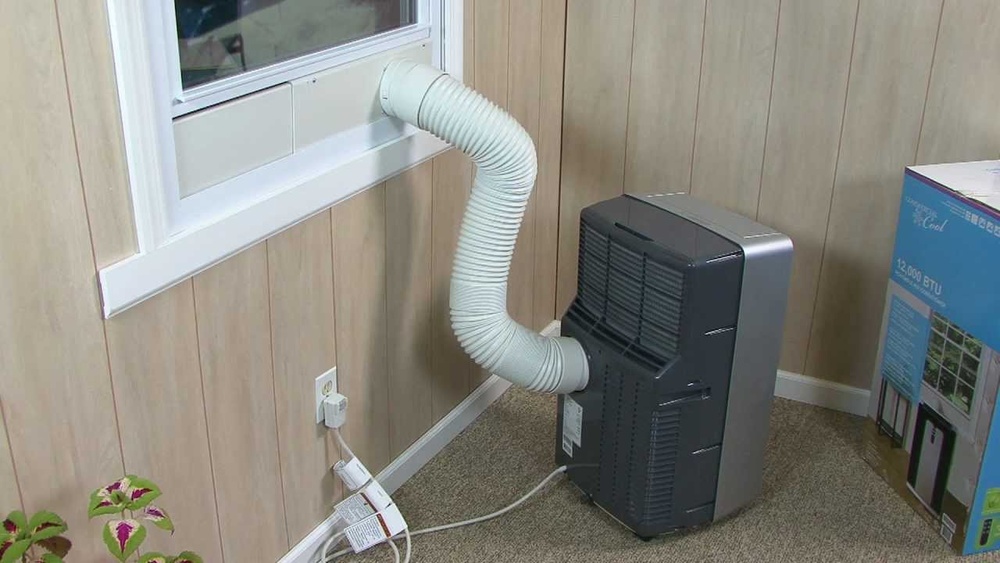
You need to put the hose out the window. This helps keep your room cool. If you do not use the hose, hot air will come back into the room. The air conditioner will not work well.

Credit: www.wikihow.com
Step-by-step Installation Guide
Follow these steps to install your portable air conditioner. Take your time. If you get stuck, ask someone to help you.
1. Choose The Right Spot
Pick a place near a window. The window should open and close easily. Make sure there is a power plug close by. Do not use an extension cord. It can be unsafe.
Leave some space around the air conditioner. Most makers say to leave at least 30 centimeters on each side. This helps the machine get enough air.
2. Prepare The Window
Open the window. Take the window kit from the box. It has a panel or bracket that fits into your window. Measure your window with the tape. Cut the panel to fit if you need to. Use scissors or a utility knife for this.
If your window slides up and down, put the panel at the bottom. If it slides side-to-side, put it on the side. The panel should fit tight in the window. This keeps bugs and hot air out.
3. Attach The Exhaust Hose
Take the exhaust hose and connect it to the back of the air conditioner. Turn it until it locks in place. Some hoses click or snap in. Others screw on.
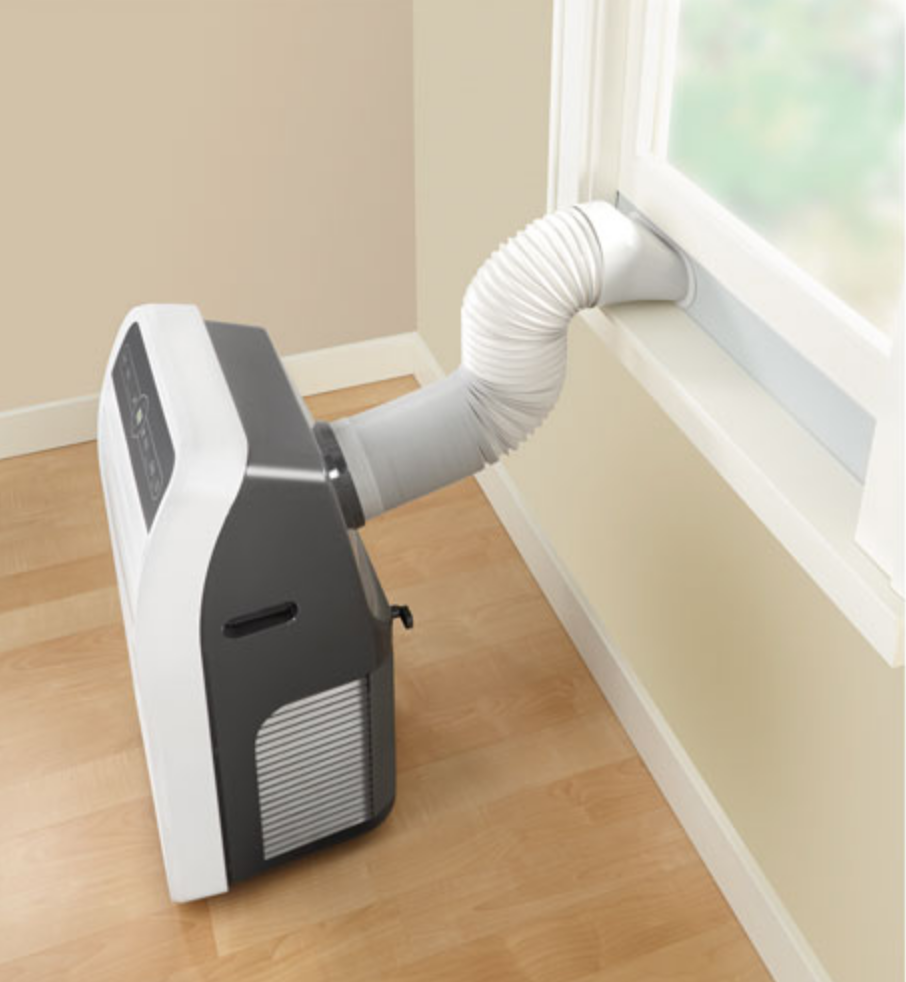
Next, connect the other end of the hose to the window panel. The kit has a round hole for this. Push the hose in and twist it. Make sure there are no gaps.
Check the hose. It should be as straight as possible. Do not bend it too much. Long or twisted hoses make it harder for hot air to go outside.
4. Seal The Window
Use the foam strips to seal any gaps around the panel. This keeps warm air out. It also stops bugs from coming in. Press the foam into the edges with your fingers.
Close the window tightly against the panel. Some kits have screws or locks to hold the panel in place. Use a screwdriver if needed.
5. Plug In And Test
Plug the air conditioner into the wall. Turn it on. Choose a cooling setting. Wait a few minutes. You should feel cool air coming out. Check the hose and window. Make sure hot air is going outside.
If the machine does not turn on, check the power plug. Make sure everything is tight and safe.
6. Empty The Water Tank (if Needed)
Some portable air conditioners collect water in a tank. Others send the water outside. If your model has a water tank, check it often. When the tank is full, the machine may stop working.
To empty the tank, pull it out from the bottom. Pour the water into a bucket or sink. Put the tank back in place. Some models have a drain plug instead of a tank. Open the plug and let the water drain into a pan.
Comparing Portable Air Conditioner Features
It is good to know what makes one portable air conditioner different from another. Here is a simple comparison:
| Feature | Basic Model | Advanced Model |
|---|---|---|
| Cooling Power | 7,000 BTU | 12,000 BTU |
| Room Size | 15 m² | 30 m² |
| Water Removal | Manual tank | Self-evaporating |
| Remote Control | No | Yes |
| Price | Low | High |
The main things to look for are cooling power, room size, and water removal. A bigger room needs a stronger machine.
Common Mistakes And How To Avoid Them
Many people make mistakes when they set up a portable air conditioner. Here are some things to watch out for:
- Using a bent hose: Keep the hose as straight as you can. This helps hot air move out fast.
- Not sealing the window: If you leave gaps, hot air and bugs can get in. Always use the foam strips.
- Placing the unit in a corner: The machine needs space around it to work well.
- Ignoring the water tank: If you forget to empty it, the machine may stop.
- Using an extension cord: Always plug your air conditioner straight into the wall. This is safer.
Practical Tips For A Better Cooling Experience
You can make your room cooler and save energy with these tips:
- Close curtains or blinds. Sunlight makes the room hot.
- Shut doors to other rooms. This keeps cool air where you want it.
- Clean the air filter often. Dust stops cool air from coming out.
- Set the machine to a comfortable temperature. Most people like 23°C to 25°C.
- Turn off other heat sources in the room.
If you use these tips, your portable air conditioner will work better. You will feel cooler and use less power.
Credit: occpolska.pl
How To Care For Your Portable Air Conditioner
Looking after your machine will help it last longer. Here are some easy ways to care for it:
- Clean the filter every two weeks. Take it out and wash it with water. Let it dry before you put it back.
- Check the exhaust hose for dust. Wipe it with a damp cloth.
- Empty the water tank as needed.
- Store the machine in a dry place when you do not use it.
If you move the air conditioner, be gentle. Do not tip it over. Wait at least an hour before you turn it on again. This helps the inside parts work right.
Troubleshooting: What To Do If Something Goes Wrong
Sometimes things do not work right. Here are some problems and simple fixes.
| Problem | Possible Cause | What to Do |
|---|---|---|
| No cool air | Filter is dirty | Clean the filter |
| Unit does not turn on | Plug is loose | Check the plug |
| Water leaks | Tank is full | Empty the tank |
| Strange noise | Hose is bent | Straighten the hose |
| Bad smell | Filter is old | Replace the filter |
If you still have problems, check the manual that comes with your air conditioner. Sometimes you need to call the maker for help.
Energy Use And Cost
Portable air conditioners use electricity to cool a room. Most models use between 900 to 1,500 watts per hour. This is about the same as a hair dryer or a microwave. If you run the machine for 8 hours a day, it will cost you about 1 to 2 euros per day.
The cost depends on your local electricity price.
You can save energy by setting the temperature higher. Each degree you raise the setting can save up to 10% on your bill. Keep the hose and filter clean to help the machine work less.
When To Call A Professional
Most people can set up a portable air conditioner without help. But sometimes you need a professional. You should call for help if:
- The hose does not fit your window.
- You need to install a new power plug.
- The machine makes a loud noise or smells like burning.
- You see water leaking from inside the unit.
If you are not sure what to do, it is better to ask for help. This keeps you and your home safe.
Extra Tips For Different Window Types
Most window kits fit windows that slide up and down or side to side. If you have a window that opens out or in, you may need a special kit. Some people use a piece of wood or plastic instead of the panel.
Cut a hole for the hose and seal the edges well.
For sliding doors, you can buy longer window kits. Make sure the hose reaches outside. Always seal around the panel to stop air leaks.