Many people use portable air conditioners to stay cool in hot weather. These machines are easy to move from room to room. Most need a window to get rid of hot air. But not every room has a window. Maybe you live in a basement, a small office, or a room with thick walls. You may feel stuck with a hot room and a big problem.
But you do have options. You can vent a portable air conditioner without a window. You must send the hot air somewhere. If you do not, the air conditioner will not cool your room. This guide will show you safe and simple ways to vent your portable air conditioner.
You will learn how each method works, what tools you need, and what to watch out for. You will also see real examples and helpful tips. This way, you can keep cool, protect your air conditioner, and use your room in a smart way.
Why Venting Matters
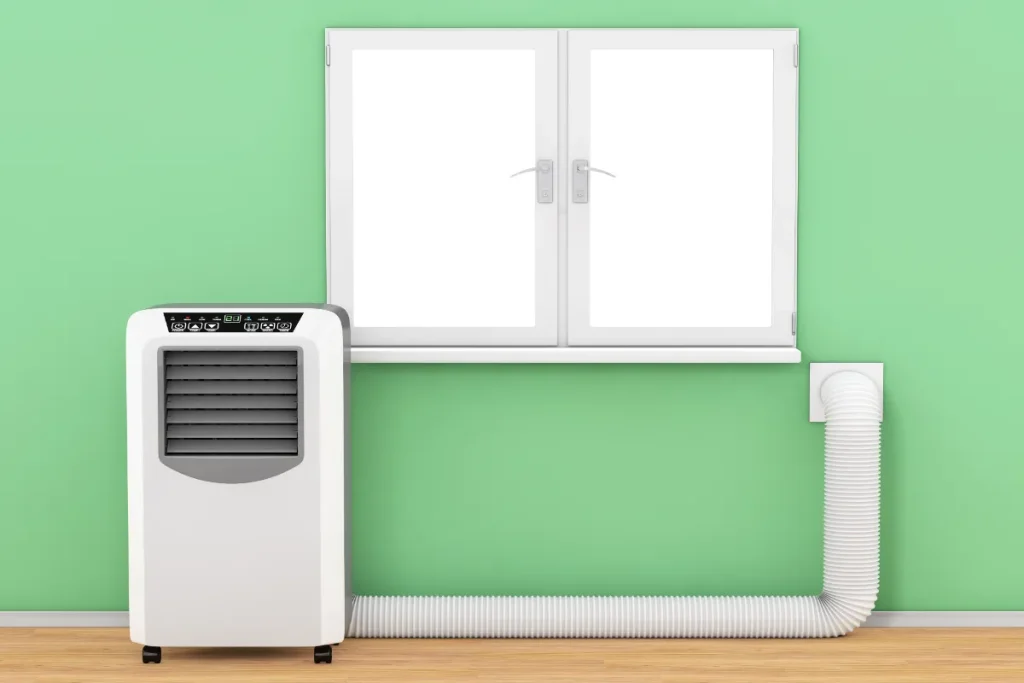
Portable air conditioners pull hot air from your room. They use a fan and a cooling system to chill the air. Then, they blow the hot air out through a hose. If you do not vent the hot air outside, it goes right back into your room.
This means your air conditioner will run all the time, but the room will not get cool. The machine will work harder. This can break the air conditioner.
Venting lets your machine work well and last longer. It also saves money. If the machine does not have to run all the time, you use less power. This lowers your electric bill.
Common Challenges Without A Window
Many people do not have a window in every room. Basements, garages, and inside offices often have no windows. Some windows are too small. Some are painted shut. Some people live in apartments where they cannot change the window.
This makes it hard to use a portable air conditioner in the normal way. You need to find another place to send the hot air. The good news is that you have more choices than you think.
Safe Ways To Vent A Portable Air Conditioner Without A Window
You can vent your portable air conditioner in many ways. Each way has good points and bad points. Each one needs a few tools. The best way depends on your room, your building, and your budget.
Let’s look at the best options.
1. Vent Through A Sliding Door
A sliding door is a wide glass door that opens sideways. Many homes have them. You can vent your air conditioner through this door.
How to do it:
- Open the sliding door a small amount.
- Place the vent hose in the gap.
- Use a sliding door seal kit. This is a strip of plastic or foam. It fills the gap and holds the hose in place.
- Close the door against the kit to block outside air.
Most hardware stores sell seal kits for sliding doors. They are easy to use. You do not need to drill or cut.
Benefits
- It is quick to set up.
- You do not need to change your door.
- You can remove the kit when you finish.
Problems
- You cannot lock the door fully while using the kit.
- Some air can leak in or out if the kit does not fit well.
2. Vent Into A Drop Ceiling
Many offices have drop ceilings. This means there are panels in a metal frame. You can take out a panel. You can vent the hot air into the space above the ceiling.
How to do it:
- Remove one ceiling panel.
- Place the vent hose through the opening.
- Use a ceiling vent kit to hold the hose in place. This stops the hose from moving.
You can buy special kits for drop ceilings. They are safe and easy to use. Make sure the space above the ceiling is not used for other air systems.
Benefits
- You do not change walls or windows.
- You can use this method in many offices or basements.
Problems
- The air above the ceiling can get hot.
- Some buildings do not allow this. Check with your building manager.
3. Vent Through A Wall
You can make a hole in the wall and run the hose outside. You should only do this if you own your home. Renters need to ask the landlord first.
How to do it:
- Find a wall that leads outside.
- Use a drill and saw to make a hole. The hole must be a little bigger than the hose.
- Fit a wall vent cover. This keeps bugs and rain out.
- Put the vent hose through the hole.
You can buy wall vent covers at hardware stores. They come in different sizes.
Benefits
- The vent is neat and out of the way.
- You can use it all year.
Problems
- You must cut a hole in the wall.
- You need tools and some skill.
4. Vent Through A Dryer Vent
Some homes have a dryer vent in the wall. This is a round hole for a clothes dryer. If you do not use the dryer vent, you can use it for your air conditioner.
How to do it:
- Remove the dryer hose.
- Place the air conditioner hose in the vent hole.
- Seal any gaps with tape or foam.
Make sure the vent is clean and does not go into a shared system.
Benefits
- You do not need to make a new hole.
- The vent leads straight outside.
Problems
- You cannot use the dryer at the same time.
- Some dryer vents are too small for the air conditioner hose.
5. Vent Into A Chimney
If you have an old chimney you do not use, you can vent through it. The chimney must be clean and empty.
How to do it:
- Place the vent hose inside the chimney.
- Seal the space around the hose with foam.
Check that your chimney is safe. Do not use a chimney that other rooms need for gas or fire.
Benefits
- You do not need to cut walls.
- You use space you already have.
Problems
- The chimney must be clean and unused.
- Some air can come back down if the seal is poor.
6. Vent Into The Attic
If you have an attic, you can vent the hot air there. The attic should have vents to the outside, so hot air can leave the house.
How to do it:
- Place the vent hose through a ceiling or wall into the attic.
- Make sure the attic is vented outside.
This method works best for homes, not apartments.
Benefits
- You keep the hose out of sight.
- The attic can handle hot air for short times.
Problems
- The attic can get very hot.
- Long-term use can damage items in the attic.
7. Vent Into A Garage
Some people vent into a garage. This only works if the garage is empty or not used for living. Do not do this if you keep pets or people in the garage.
How to do it:
- Place the vent hose through a wall or door into the garage.
- Make sure the garage has airflow to the outside.
Benefits
- It is easy if the garage is next to your room.
- You do not need to use windows.
Problems
- The garage will get hot.
- This can be unsafe if you use the garage for cars or people.
8. Vent Through A Casement Window
A casement window opens like a door. It swings out from the side. You can use a special kit to vent through this window.
How to do it:
- Open the window a little.
- Use a casement window seal kit.
- Place the vent hose in the kit opening.
These kits are easy to find online.
Benefits
- No need to cut the wall.
- Easy to remove.
Problems
- The window cannot close all the way.
- Some air may leak in.
9. Use A Sliding Glass Block
Some homes have glass block windows. You can remove one block and put in a vent panel.
How to do it:
- Remove one glass block.
- Install a vent panel with a hose opening.
- Place the vent hose in the opening.
You can buy vent panels for glass block windows.
Benefits
- The vent looks neat.
- You do not need to cut walls.
Problems
- Removing glass blocks can be hard.
- You may need help from a builder.
10. Use A Door Panel Insert
You can buy or make a vent panel that fits in the bottom of a door. This panel has a hole for the hose.
How to do it:
- Remove the door and put in the insert.
- Place the vent hose in the opening.
This works well for rooms with outside doors.
Benefits
- The door can still open and close.
- The vent is low and out of sight.
Problems
- You must remove and store your door.
- Some inserts do not fit all doors.
Comparison Of Venting Methods
To help you pick the best way, here is a simple table. It shows how easy each method is, and what tools you may need.
| Venting Method | Setup Difficulty | Special Tools Needed |
|---|---|---|
| Sliding Door | Easy | Seal Kit |
| Drop Ceiling | Medium | Ceiling Kit |
| Wall Vent | Hard | Drill, Saw, Vent Cover |
| Dryer Vent | Medium | Tape, Foam |
| Chimney | Medium | Foam |
| Attic | Medium | None |
| Garage | Easy | None |
| Casement Window | Easy | Seal Kit |
| Glass Block | Hard | Vent Panel |
| Door Panel Insert | Medium | Insert Panel |
Important Safety Tips
Venting your portable air conditioner can be easy. But you must use safe methods. Here are some things to remember:
- Always send hot air outside or into an unused space.
- Do not vent into small, closed rooms. This can make the air unsafe.
- Seal the vent hose well. Gaps can let bugs or rain inside.
- Check your building rules before making holes or big changes.
- Clean the vent hose often. Dust and dirt can block the airflow.
Cost Comparison
Some methods are cheap. Some cost more money. Here is a table with average costs in dollars.
| Method | Estimated Cost |
|---|---|
| Sliding Door Kit | $30 – $70 |
| Drop Ceiling Kit | $25 – $60 |
| Wall Vent (DIY) | $40 – $100 |
| Dryer Vent (Reuse) | $10 – $20 |
| Chimney | $5 – $15 (for foam) |
| Attic | $0 – $20 |
| Garage | $0 – $10 |
| Casement Window Kit | $25 – $70 |
| Glass Block Panel | $50 – $150 |
| Door Panel Insert | $40 – $100 |
Two Non-obvious Insights
Most people do not know these key facts:
- Shorter vent hoses work better. Long hoses make the air conditioner work harder. Try to keep the hose as short as you can.
- Venting into the wrong space can cause mold. Hot air has water in it. If you vent into a small, closed space, you can get mold and bad smells. Always make sure air can escape outside.
Common Mistakes To Avoid
- Do not let the hose bend too much. This blocks the air.
- Do not use thin plastic wrap or trash bags to seal gaps. They break easily.
- Do not forget to check building rules. Some places do not allow holes in walls.