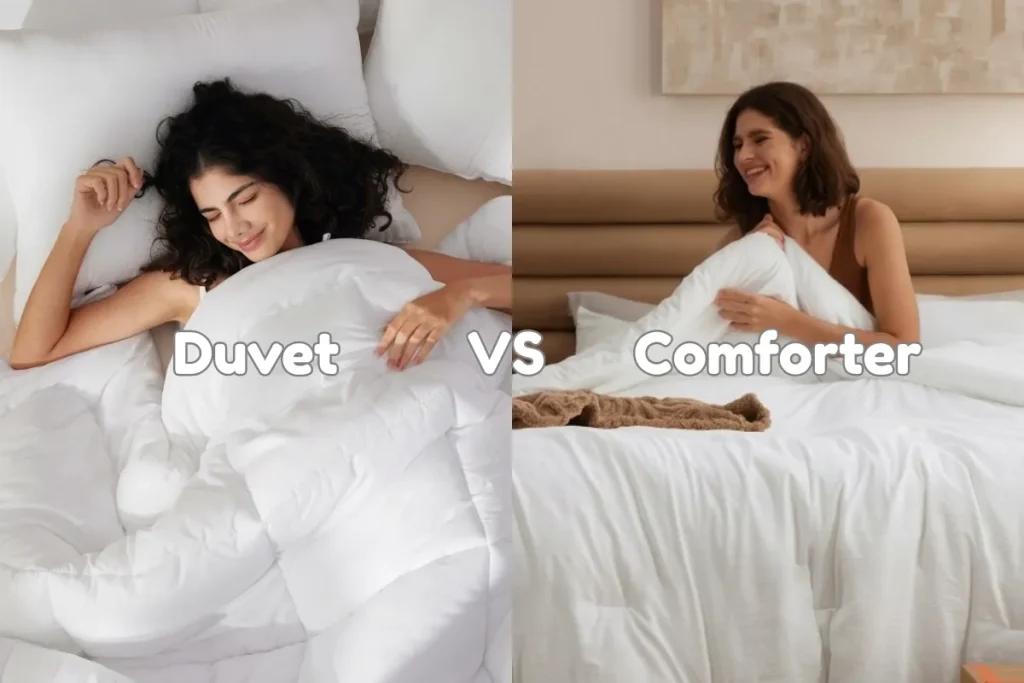
Many people want a soft and warm bed. Good bedding helps you sleep better. When you buy bedding, you often see the words duvet and comforter. These words can confuse you. Both keep you warm. Both make your bed look nice. But they are not the same. Many people think they mean the same thing. They do not. Each one has its own style, use, and care needs.
Let’s look at what makes a duvet different from a comforter. I will explain each one in simple words. I will tell you how they feel, how you use them, and how you wash them. You will also see which one may be better for you.
By the end, you will know the key facts to choose the right bedding for your needs.
What Is A Duvet?
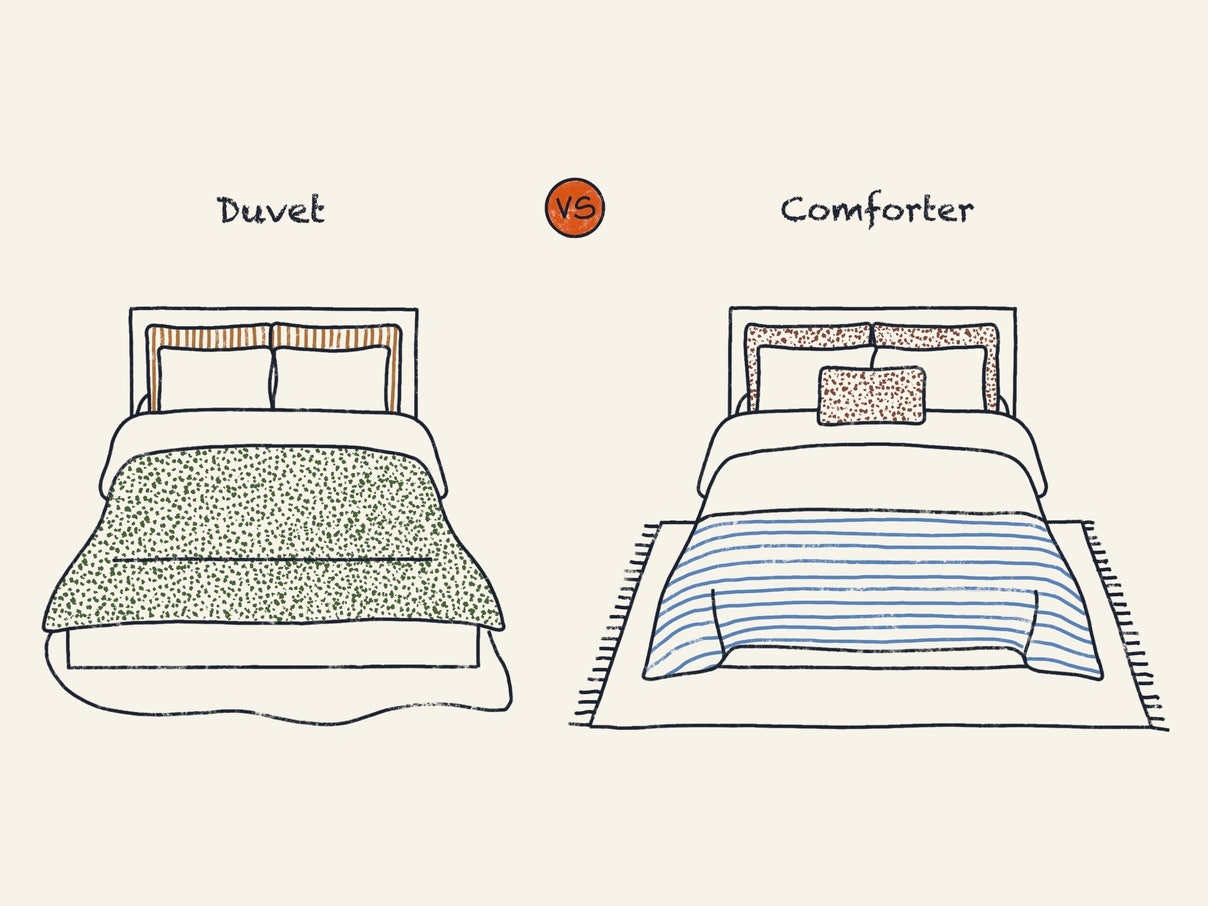
A duvet is a soft, thick blanket. You use it on top of your bed. It is usually white or light in color. It is filled with things like feathers, down, or polyester. The word “duvet” comes from French. It means “down,” which is the soft feathers under a bird’s outer feathers.
Most people use a duvet cover with their duvet. A duvet cover is like a big pillowcase. It protects your duvet. It also lets you change the color or style of your bed without buying a new duvet. You can remove the cover and wash it. You do not have to wash the duvet very often.
How A Duvet Looks And Feels
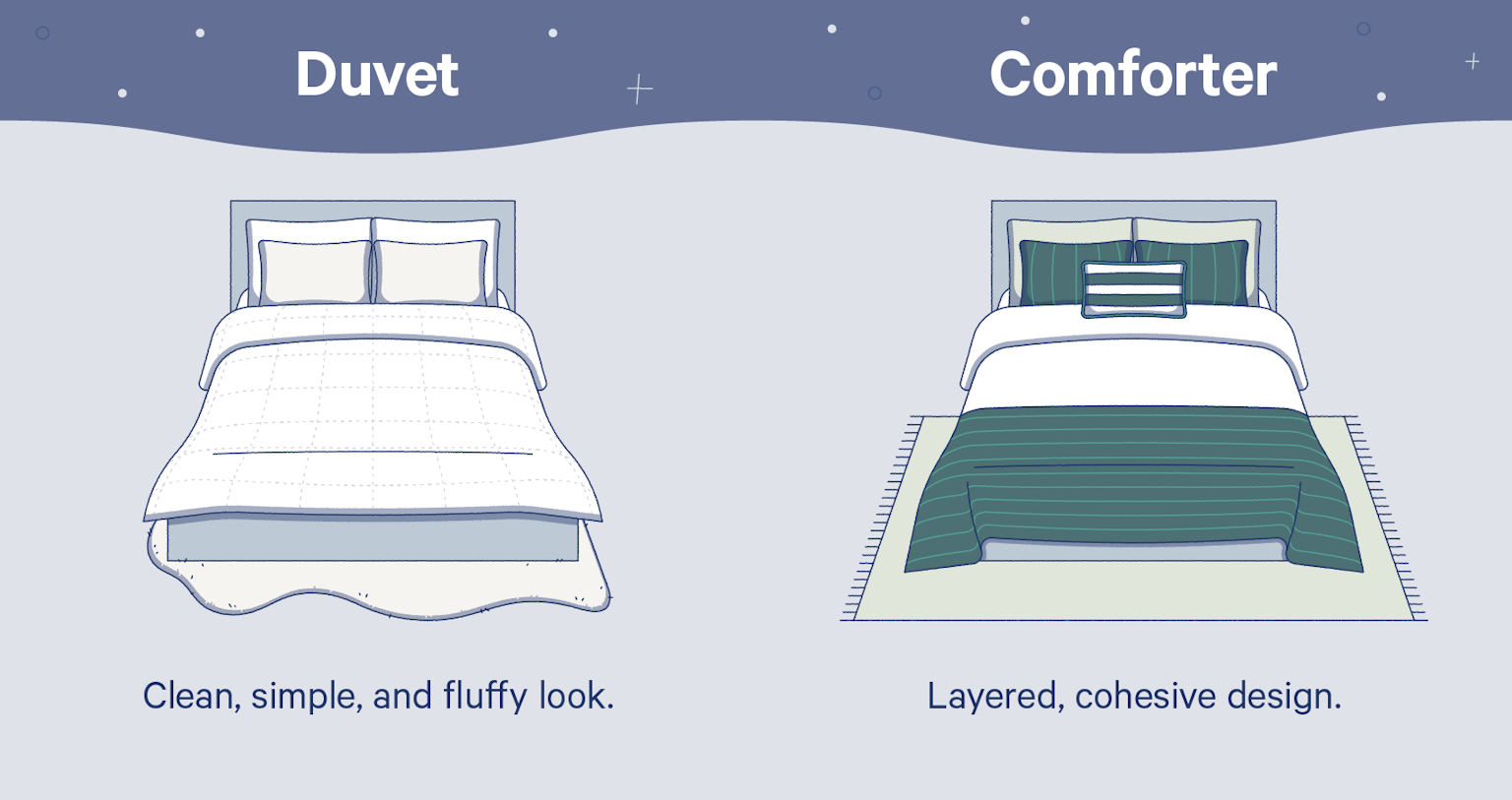
A duvet is often puffy. It is stitched to keep the filling in place. Some duvets feel light. Some feel heavy. This depends on what is inside and how much filling there is. A duvet is usually plain white. The cover gives it style and color.
How You Use A Duvet
You put the duvet inside the cover. You close the cover with buttons, zippers, or ties. You lay the duvet on your bed. At night, you pull it over yourself. In the morning, you can just fluff it and smooth the cover.
You do not need to use extra sheets or blankets unless you want to.
What Is A Comforter?
A comforter is also a thick, warm blanket. You use it on top of your bed. It is filled with things like cotton, down, or polyester. The filling is stitched in place. But unlike a duvet, a comforter comes with a pretty cover sewn on. You do not need to use a separate cover. The comforter is ready to use as it is.
How A Comforter Looks And Feels
Comforters come in many colors, patterns, and styles. They may be fluffy or flat. Some comforters are very thick. Others are light. The cover is part of the comforter, so you cannot remove it.
How You Use A Comforter
You take the comforter out of the package and put it on your bed. You do not need to add a cover. You use it just as it is. At night, you pull it over yourself. In the morning, you can shake it and smooth it.
Some people use an extra sheet under the comforter. Some do not.
Credit: www.goodhousekeeping.com
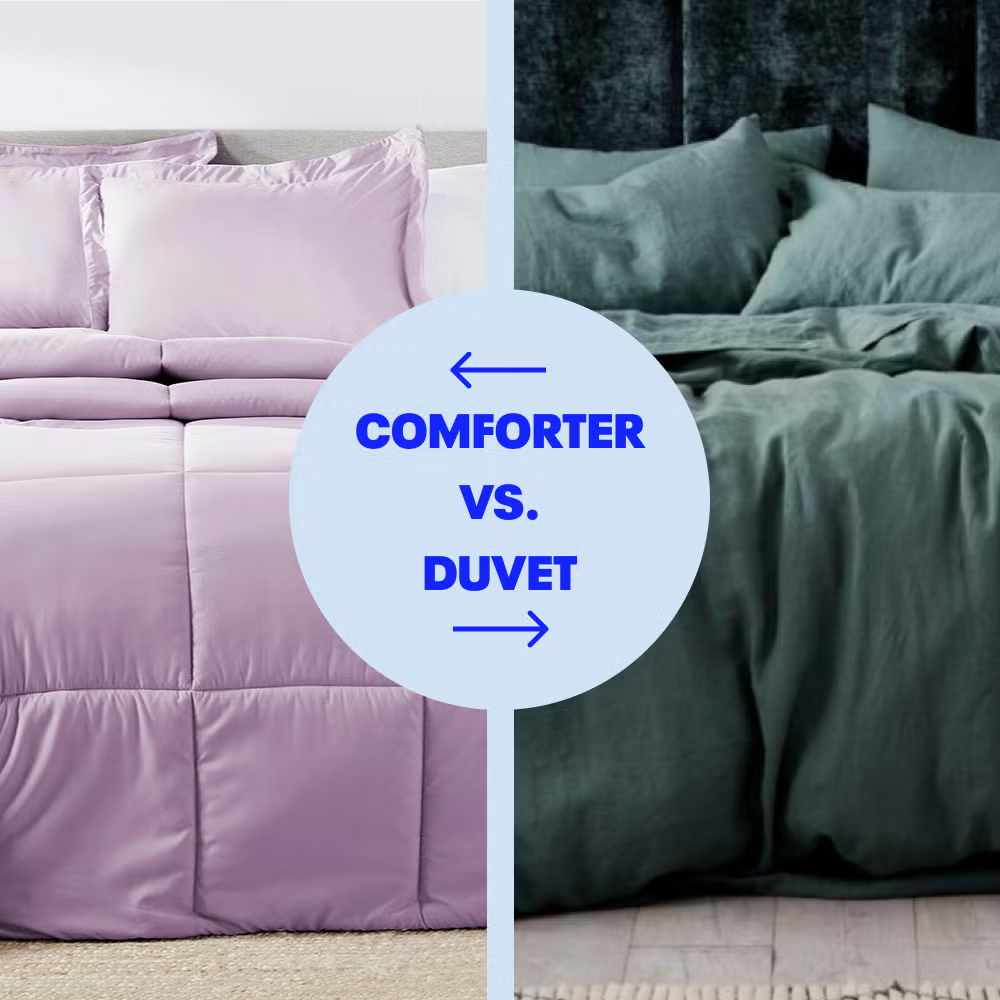
Key Differences: Duvet Vs Comforter
Many people want to know the main differences. This table will help you see them quickly.
| Feature | Duvet | Comforter |
|---|---|---|
| Cover | Needs a separate cover | Cover is sewn on |
| Style | Plain, change style with cover | Many colors and patterns |
| Cleaning | Wash the cover often, duvet less often | Wash the whole comforter |
| Use | Insert duvet in cover | Ready to use |
| Cost | Often more expensive | Often less expensive |
Duvet: Pros And Cons
Let’s look at what makes a duvet good or not so good. This helps you decide if it fits your life.
Pros
- Easy to change style. You can buy different duvet covers. You can have a new look for your bed any time.
- Easy to clean. You wash just the cover most of the time. The duvet itself stays clean.
- Very warm. Many duvets use down or feathers. These fill types trap heat well.
- No need for many layers. You can use just the duvet and cover.
Cons
- Can be hard to put in cover. You may need time and practice to fit the duvet inside the cover.
- Duvet may bunch up. If the cover is loose, the duvet can move inside.
- Often costs more. Duvets, especially with down, can be pricey.
- May not match right away. You need to buy the cover and duvet to match your style.
Comforter: Pros And Cons
A comforter may fit some people better. Here are the good and bad sides.
Pros
- Ready to use. You do not need to add anything. You just put it on the bed.
- Many colors and patterns. You can match your room with many choices.
- Often costs less. Comforters use less expensive filling or covers.
- Stays in place. The filling does not shift much because of strong stitching.
Cons
- Harder to clean. You must wash the whole comforter. This can be hard in a small washing machine.
- Style does not change. You cannot change the look unless you buy a new comforter.
- May need extra sheets. Some people use a sheet under the comforter for comfort.
- May wear out faster. Washing the whole comforter often can make it look old.
How To Choose: Duvet Or Comforter?
You want to pick the right bedding for your needs. Here are things to think about.
Your Cleaning Routine
Do you want to wash bedding often? If yes, a duvet may be better. You can wash the cover at home. You do not need to wash the whole duvet often. If you do not want to take off and put on covers, a comforter is easier.
You just wash the whole thing.
Your Style
Do you like to change the look of your room? A duvet lets you buy new covers. This is cheaper than buying a whole new comforter. If you like one style and want to keep it, a comforter may be best.
Your Budget
Duvets can cost more. Down duvets are often the most expensive. Polyester-filled duvets are cheaper. Comforters are often less costly and come in sets. If you are on a budget, a comforter is a good pick.
Your Climate
Do you live in a cold place? Duvets with down or feathers are very warm. In hot places, you may want a thin comforter. Some duvets have less filling for warm weather too.
Care And Effort
Some people do not like to fit a duvet in a cover. It can be hard to get the corners right. Comforters are easier to use every day.
Credit: casper.com
Materials Used In Duvets And Comforters
The filling inside matters. It changes how the bedding feels and works.
Common Fill Types
- Down: Soft feathers from ducks or geese. Down is very warm and light.
- Feathers: Larger, flat feathers. They are less soft than down but still warm.
- Polyester: Man-made fiber. It is cheap and easy to wash.
- Cotton: Natural fiber. It is soft and lets air pass through.
Outer Fabric
- Cotton: Breathes well and feels soft.
- Microfiber: Man-made, smooth, and light.
- Silk: Smooth and cool, but costs more.
How To Wash And Care
Good care makes bedding last longer.
Washing A Duvet
- Take off the cover and wash it every few weeks.
- Wash the duvet itself once or twice a year.
- Use a big washing machine. Duvets need space to move in the wash.
- Dry the duvet well. If it is not dry, it can smell bad or grow mold.
Washing A Comforter
- Wash the whole comforter every few weeks or months.
- Use a large washing machine if you can.
- Dry the comforter fully.
- Sometimes, comforters do not fit in home machines. You may need to go to a laundry.
Tip: Always read the care label. Some duvets or comforters need special cleaning.
Duvet And Comforter Sizes
Bedding comes in many sizes. You need to buy the right size for your bed. This table shows common sizes.
| Bed Size | Duvet or Comforter Width | Duvet or Comforter Length |
|---|---|---|
| Twin | 66-68 inches | 86-88 inches |
| Full/Double | 76-86 inches | 86-88 inches |
| Queen | 86-88 inches | 96-100 inches |
| King | 102 inches | 86-88 inches |
Note: These sizes can change by brand. Always check the package before you buy.
Common Mistakes When Buying
Many people make these mistakes. You can avoid them.
- Picking the wrong size. Measure your bed before you buy. Bedding should hang over the sides.
- Forgetting the cover. If you buy a duvet, you need a cover. Some people forget to buy both.
- Choosing hard-to-clean filling. Down and feathers are warm but need special washing. Polyester is easier to clean.
- Not checking the warmth. Some bedding is for winter. Some is for summer. Check the warmth level.
- Not reading care labels. Some bedding cannot go in home washing machines.
Two Insights Many People Miss
- Duvet covers can add warmth or coolness. Some covers are thick and make the duvet warmer. Some are thin and make it cooler. You can change covers to match the season.
- Comforters can work with covers too. You can buy a special cover for your comforter. This helps keep it clean and lets you change the style. Not all comforters fit in covers, so check the size.
Which One Should You Choose?
Choose a duvet if you like to change your style often, want easy cleaning, and do not mind putting the cover on. Choose a comforter if you want something ready to use, want a set look, and do not want to deal with covers.
You now know the main differences between duvets and comforters. You know what to check when you buy one. Good bedding can help you sleep better, feel warmer, and enjoy your bedroom more.
Credit: www.dreamcloudsleep.com